

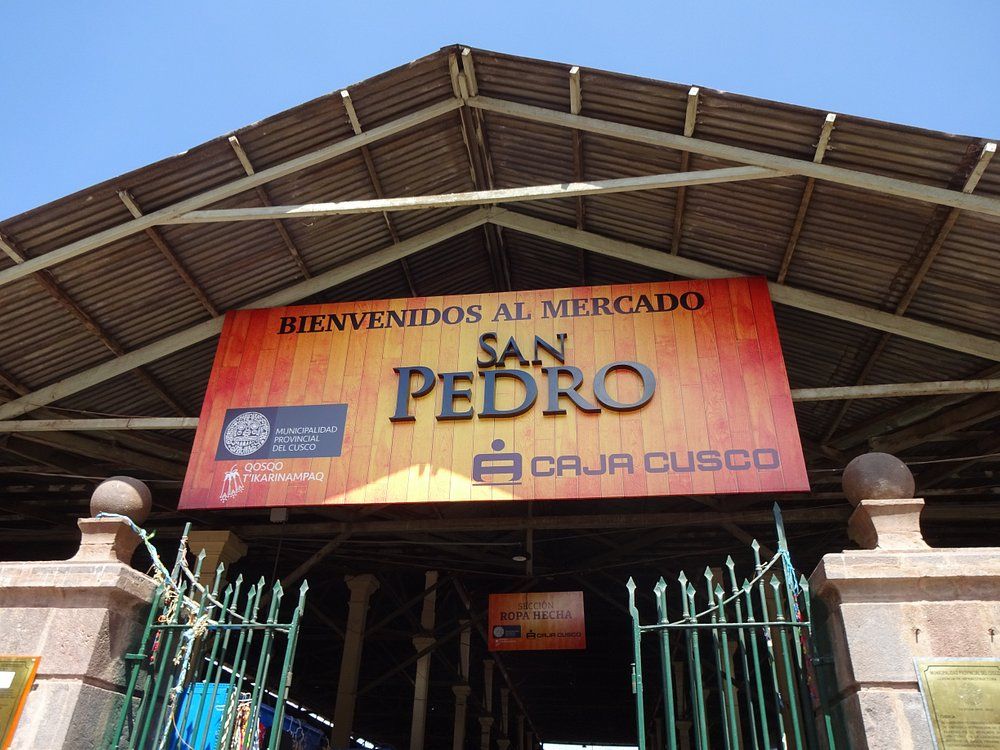
Discover the San Pedro Market in Cusco, a century-old cultural landmark designed by Gustave Eiffel. Explore traditional crafts, ancestral medicine, local gastronomy, and the living spirit of Andean culture.
San Pedro Market: A Century of Living Culture
The San Pedro Market in Cusco was constructed in 1925, making it the first formal market built in the city. Designed by architect Gustave Eiffel at the initiative of Mayor Manuel Silvestre Frisancho, this neoclassical structure was part of a broader effort to restore Cusco's splendor during a period when the city was losing its prominence among Peru's major urban centers. The arrival of the railroad reinvigorated Cusco's economy, and the market became a vital commercial hub.
Today, spanning 7,000 square meters with over 1,180 registered stalls — plus numerous ambulant vendors in surrounding streets — the market stands as a living testament to Cusquenan and Peruvian tradition. Its stands still offer products of yesteryear, artisanal crafts, ancestral medicine, and the finest examples of local and national gastronomy.
Location and How to Get There
The San Pedro Market sits between Cascaparo and Santa Clara streets, in the heart of Cusco's historic center. From the Plaza de Armas, it's less than a 10-minute walk: follow Mantas street, continue along Marques street, and enter via Santa Clara street. You'll find a small plaza that occasionally hosts artisan fairs and book fairs, with the market on your left.
From the San Pedro train station, you simply need to cross the street — both share Cascaparo street. From the Wanchaq station, a taxi ride costs between 6 to 10 soles. The market opens daily from 6:30 AM to 6:00 PM.
Historical Origins of the Market
The site where the market stands was originally part of the Inca road system. From the sacred huaca of Huacaypata departed the route toward Contisuyo. During early Spanish rule, several Inca dwellings were demolished for construction of the Hospital General de Naturales (1556), which later became the Parish of San Pedro. By the end of Spanish dominion, the area was already known as the San Pedro neighborhood.
Local residents used the ample space to commercialize goods before transporting products to the Plaza de Armas and Plaza San Francisco. After Peru's independence in 1842, Cusco entered an aggressive economic decline until the early 20th century. With the railroad's arrival and the vision of Mayor Frisancho, Gustave Eiffel was commissioned to design the metal roofing structures that still shelter the market today. Following the 1950 earthquake, a major expansion in 1955 consolidated the market into its current form.
What You'll Find Inside
Handcrafted Artisanry
The market offers an extensive variety of handmade crafts including alpaca textiles, Cusquenan ceramics, leather bags, bracelets, ponchos, and chullos (traditional Andean caps). These are unique keepsakes that authentically represent Cusco's artistic heritage.
Traditional Gastronomy
The food section is a feast for the palate. Enjoy classic dishes like chicken broth, chiri uchu, fried trout, ceviche, papas a la huancaina, and Cusquenan adobo — all at accessible prices with the homestyle flavor characteristic of Peruvian cuisine. Over 30 juice stands prepare energizing combinations with fresh fruits, honey, and pollen.
Exotic Fruits and Natural Products
Fruit stalls offer an explosion of colors and flavors with exotic varieties like chirimoya, aguaymanto (golden berry), lucuma, plus Andean seeds like sacha-inchi and kiwicha. Natural products include honey, pollen, essential oils, infusions, and ointments made from Andean ingredients.
Ancestral Medicine and Spiritual Supplies
The market serves as a center of ancestral knowledge. You'll find medicinal herbs, coca leaves, dried toads, Amazonian tinctures, and ointments made from animal fat. The 'mamitas' (market women) offer advice on spiritual cleansings and natural remedies. Here, ancestral spirituality is not a tourist attraction — it's a living practice, offering herbs for spiritual cleansings, altitude sickness teas, and guidance on Andean rituals.
Nearby Attractions
- San Pedro Train Station: Located directly across from the market, a departure point for Machu Picchu trains with preserved colonial architecture
- Arch of Santa Clara: A 19th-century stone monument commemorating Peru's independence, marking the entrance to the San Pedro neighborhood
- Temple of San Pedro: A 17th-century colonial church featuring Andean baroque style, gilded altarpieces, and Cusquenan paintings
The Market as Cultural Expression
The San Pedro Market is far more than a commercial center — it is a true symbol of Cusco's living culture and ancestral tradition. With nearly 100 years of history, this space has witnessed the city's evolution while preserving its popular essence. From its origins on ancient Inca roads to its design by Gustave Eiffel, the market represents a unique fusion of history, architecture, and daily life.
Visiting the San Pedro Market transcends simple shopping — it is experiencing Andean culture firsthand, connecting with spiritual roots, and carrying home authentic memories of a city that breathes history and tradition. Every corner, from craft stalls and natural medicine to restaurants serving traditional dishes, reflects the soul of Cusco.
