Explore the most powerful mystical and spiritual sites in Cusco, from ancient Inca temples to sacred mountains and lagoons. Discover where to perform ancestral ceremonies and connect with Andean energy.
Mystical Tourism and Spirituality in Cusco
Cusco harbors a profound spiritual connection with its ancestral past and the natural world. The energy surrounding this ancient Inca capital remains palpable, transcending centuries of change. Much of this spiritual potency stems from the fact that most of its original constructions were dedicated to celestial worship — the sun, moon, and stars — with the Incas erecting magnificent temples to these deities throughout what we now call the Historic Center.
Archaeological evidence reveals that ancient Incas performed gratitude ceremonies at mountains, rivers, caves, water springs, and especially to the earth itself. Today, Cusco has become one of the most renowned destinations for mystical tourism, thanks to the vital cultural and ancestral heritage that many communities continue to transmit — most notably the Q'eros nation in the highlands of Paucartambo.
What Is Mystical Tourism in Cusco?
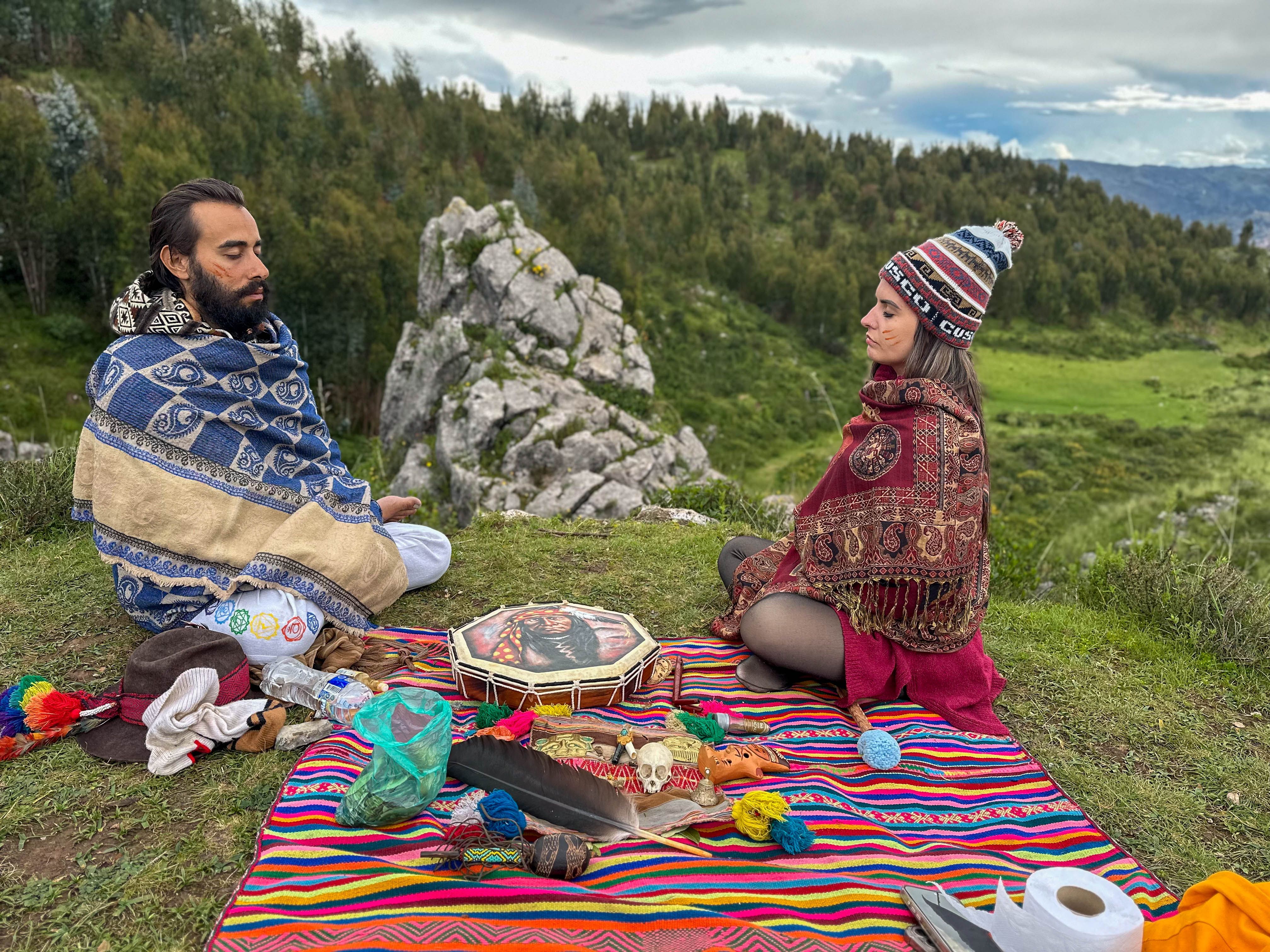
Mystical tourism in Cusco is designed for those seeking to transform their lives through spiritual connection. It offers healing rituals and retreats to sacred spaces for energy renewal. The spirituality achieved through these experiences provides inner peace — a crucial step toward physical and mental well-being. Through ceremonies and rituals, participants explore deep emotions and gain self-knowledge, developing heightened empathy and a better understanding of themselves and their surroundings.
This form of experiential tourism breaks cultural barriers, making it ideal for travelers who wish to transcend the boundaries of their own consciousness. By immersing in ancestral ceremonies, visitors come to understand the beliefs, traditions, and healing practices that have sustained Andean civilizations for millennia.
The Temple of the Moon in Cusco
The Temple of the Moon stands as one of the most important Inca constructions of the empire. Its significance is amplified by an extensive esplanade nearby where ceremonies, rituals, and offerings were historically performed. The temple ingeniously utilizes the geological formation of its location, with principal carvings made upon a considerable stone formation. Its shape resembles a grotto or cavern — the same architectural concept found in Machu Picchu's Great Cavern.
The temple features a distinctive portal-like division believed to serve as a cosmic connection point, particularly with the moon. Both interior and exterior surfaces display stone carvings, notably a semicircular figure resembling the lunar shape.
How to Reach the Temple of the Moon
Located near Sacsayhuaman as one of its archaeological precincts, the Temple of the Moon is easily accessible from central Cusco. Options include taxi (approximately 15 soles), public bus (1 sol, via Senor de Huerto or Cristo Blanco routes), or walking from the Plaza de Armas in 30 to 45 minutes. Morning visits are recommended, and going with companions is advisable as it tends to be a less-visited site.
Ceremonies at the Temple of the Moon
Visitors traditionally perform gratitude offerings dedicated to the Moon, often associated with the Pachamama. Offerings include coca leaves, corn kernels, and local foods, with chicha always present. The temple is also known as an Inca fertility site, attracting couples seeking blessings for prosperity in money, work, and love. A paqo or Andean shaman's guidance is recommended for proper ceremonial practice.
The Temple of the Monkeys (Kusillochuyoc)
The Temple of the Monkeys, or Kusillochuyoc (from the Quechua 'Kusillu' meaning 'monkey'), comprises ruins of an ancient Inca edifice. Its proximity to the Temple of the Moon suggests a connection between both structures, particularly for lunar observation. Today, visitors can appreciate the foundations and high-relief carvings depicting a monkey figure, along with hidden serpent and toad motifs. The site's solitude makes it ideal for connecting with the tranquility of the surrounding landscape.
Located near Qenqo, minutes from Sacsayhuaman, it's reachable by walking approximately 40 minutes from the historic center, by taxi (15-20 soles), or public transport (1 sol). The temple is considered a space of introspection and connection with ancestral wisdom, where visitors perform energy cleansing rituals and gratitude offerings using coca leaves, corn, flowers, and chicha.
Inkiltambo: The Flowering Garden
Inkiltambo is an Inca precinct whose unique feature is that its construction integrates with the rocky terrain, featuring various stone carvings. The name translates to 'flowering place,' suggesting it served as a resting space or inn, likely for the Tahuantinsuyo elite. Its most distinctive characteristic is five niches (hornacinas) — two inside and three outside — along with terracing systems and aqueducts with drainage.
Located in San Sebastian district, approximately 30 minutes from the historic center, Inkiltambo remains rarely visited by tourists, preserving a tranquil and undisturbed atmosphere. The surrounding natural environment with abundant vegetation and panoramic views makes it ideal for meditation and spiritual connection. Visiting with a mystical tour guide is recommended.
Chuspilloq: Where Spirits Bloom
Chuspilloq is a special place in Cusco whose construction was linked to Andean spirituality from its origins. The Quechua name means 'the one that has sprouts' or 'to bloom' — perfectly reflecting the spiritual connection felt here. Located in San Sebastian district at 3,600 to 3,800 meters, it's reached via an ancient Inca path that itself offers a unique experience.
Though it lacks extensive architectural structures, Chuspilloq stands out for its mystical energy, making it ideal for meditation, gentle trekking, and spiritual connection. Many visitors report feeling a special energy here, perfect for yoga practitioners, those performing Andean rituals, or conscious tourism enthusiasts. Access options include walking from San Blas (approximately 1.5 hours), taxi (15-25 soles plus a 15-20 minute walk), or guided tours.
Humantay Lagoon: Turquoise Mirror of the Apus
The Humantay Lagoon is one of Cusco's most impressive natural wonders, situated at the foot of the Humantay snowcap at approximately 4,200 meters. Its intense turquoise color, created by glacial meltwater, surrounded by snow-capped mountains, makes it an ideal destination for unique landscapes and spiritual experiences. The lagoon is considered sacred by Andean communities, believed to be connected with the Apus (mountain spirits) and Pachamama's energy.
Located in Mollepata district, about 3 hours by vehicle from Cusco, the lagoon requires a 1.5 to 2-hour uphill hike from Soraypampa. Visitors perform rituals of gratitude to the Pachamama and especially to Apu Humantay, with offerings of coca leaves, flowers, corn, fruits, and chicha. Energy renewal rituals seeking protection, health, and harmony are common here.
Ausangate: The Sacred Creator of Waters
The Ausangate snowcap reaches 6,384 meters, making it Peru's fifth highest mountain and the tutelary Apu of the Cusco region. Part of the Vilcanota Cordillera, it's considered a place of immense spiritual power. For indigenous peoples, Ausangate is the 'creator of waters,' as its glaciers birth lagoons like Sivinacocha that fertilize the land. The surrounding landscape features multicolored mountains, turquoise lagoons, glaciers, high-Andean fauna, and communities preserving ancestral traditions.
The Ausangate Trek spans 5-6 days covering approximately 70 km through high mountain landscapes, starting from Tinki village (3-4 hours from Cusco). The mountain hosts one of the Andes' most important pilgrimages — Qoyllur Rit'i — a festival blending Christianity and Andean spirituality recognized as Intangible Cultural Heritage of Humanity. Sacred ceremonies include the Qarpay initiation, where Andean priests immerse in sacred waters to receive ancestral blessings.
Salkantay: The Wild Mountain
The Salkantay snowcap rises to 6,271 meters, making it Cusco's second highest peak. Its Quechua name 'Salqa Antay' means 'wild mountain,' and it's revered as an Apu or protective spirit by Andean communities. Located in the Vilcabamba Cordillera, the Apu Salkantay is considered the father of all mountains, protector of Limatambo, Mollepata, Machu Picchu, and Choquequirao. Its glaciers feed the Urubamba River, considered sacred by the Incas who believed its waters returned from the jungle as stars through the Milky Way.
The famous Salkantay Trek is a 5-day hike culminating at Machu Picchu, starting from the Cusco-Mollepata-Soraypampa route. Ceremonies here focus on gratitude and protection rituals related to agriculture, climate, and crop health. Offerings include coca leaves, chicha, flowers, corn, and water from Humantay Lagoon. The best season to visit is April through October during the dry season.
